
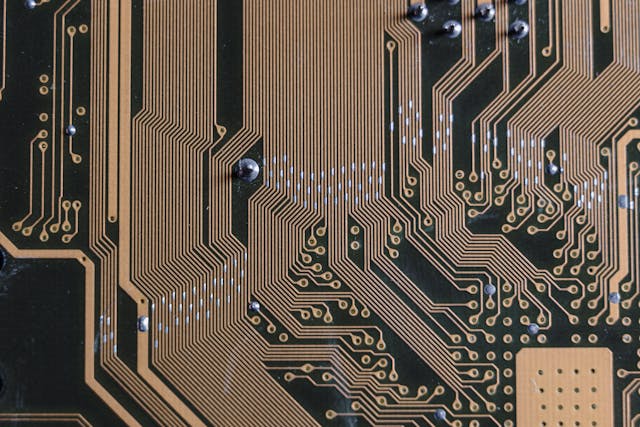
Taiwan, the heart of the global semiconductor industry, is strengthening the security of its supply chain. Under President Lai Ching-te, the country is seeking greater cooperation with democratic countries to mitigate the risks posed by China’s military and economic pressure. As he pointed out at the Semicon semiconductor exhibition in Taipei: “No country can tackle these challenges alone.”
Taiwan plans to invest more than 100 billion Taiwanese dollars (approximately 2.8 billion euros) in artificial intelligence infrastructure, quantum computing, and robotics. These investments are also aimed at attracting international companies to open research centers on the island, which Beijing still considers its territory.
One of the most important platforms for cooperation between Taiwan and Europe is the new TSMC factory in Dresden, which the Taiwanese chip giant is building together with Bosch, Infineon, and NXP. It will be TSMC’s first manufacturing complex in Europe and will help make the region’s semiconductor supply chain more resilient to global shocks.
The Dresden factory is seen as a symbolic and strategic step, strengthening not only Germany’s but also Europe’s chip independence. This project marks a new phase in European industrial policy, where technological security is becoming a central priority alongside energy and defense.
Meanwhile, German company Infineon, one of TSMC’s partners, is experiencing a breakthrough in China. It is a world leader in automotive chips, and currently, cooperation with new customers such as Xiaomi is helping to compensate for weak demand from traditional European car manufacturers.
Infineon supplies more than 60 different components for Xiaomi’s luxury electric car model SU7 — from energy-efficient silicon carbide transistors to more than ten microprocessors that control the climate system and window mechanisms. The contract between the companies is valid until 2027.
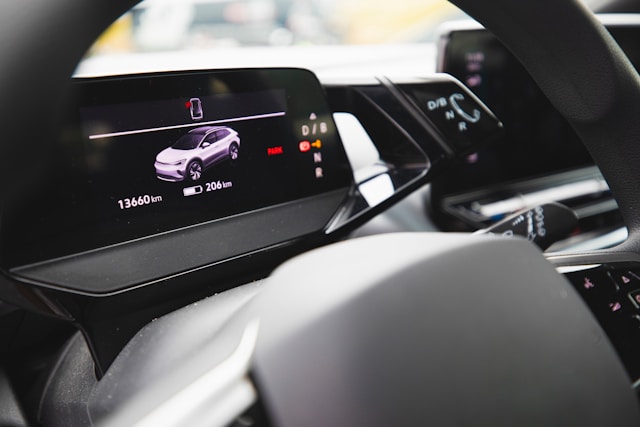
According to Infineon, electric cars contain chips worth around $1,300, while in cars with internal combustion engines, this amount is only $750. This means that the transition to electromobility directly increases demand for Infineon products, which is essential for the company’s growth.
Currently, 28% of Infineon’s revenue comes from China, and more than half of its total turnover is generated directly by the automotive industry. Although these figures confirm a strong position, analysts, including those from Union Investment, warn that the biggest long-term risk is growing competition from Chinese companies such as BYD and Nio, which develop their own semiconductors.
Chinese tech giant Xiaomi, meanwhile, has announced a $7 billion investment program in chip development by the end of the decade. This means that the current cooperation with Infineon may be temporary — until local manufacturers develop their own alternatives.
Thus, the semiconductor market is becoming a new geopolitical front. While Taiwan is trying to strengthen ties with Europe and the US to ensure technological security, German companies such as Infineon are balancing between two worlds — Western values and China’s huge market.
Summary
Chips have become a strategic resource in global politics. Taiwan is investing €2.8 billion in technology security and building cooperation with Europe, while Germany’s Infineon earns $1,300 for every electric car and generates 28% of its revenue in China. This interdependence shows that technological security, industrial growth, and geopolitics are now inextricably linked — and that future economic stability will depend on how securely microscopic electrons flow in semiconductor crystals.

Leave a Reply
You must be logged in to post a comment.