
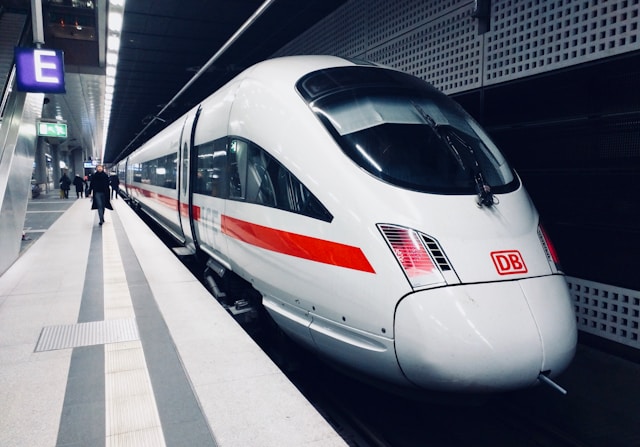
The international internet speed measurement company Ookla evaluated Wi-Fi performance on trains in Europe and Asia. Deutsche Bahn ranks in the top third in this comparison, especially when compared to countries with weaker digital infrastructure.
With an average download speed of 64.58 Mbit/s, Sweden takes first place. There, internet connectivity on trains is considered part of the national rail infrastructure, ensuring a better passenger experience. The Netherlands, with an average speed of only 0.41 Mbit/s, ranks last.
In Germany, the average download speed is 14.85 Mbit/s and the upload speed is 16.09 Mbit/s, which puts it in 6th and 5th place in the European rankings. However, there has been no significant progress in recent years.
Ookla points out that almost two out of five train Wi-Fi systems in Europe still use the WLAN 4 standard (from 2009). This also applies to Germany, where outdated technology is slowing down development.
More modern networks, such as WIFI@DB and WIFIonICE, which operate with WLAN 5, offer up to 240% faster speeds.
South Korea, with 98.1% coverage in the 5 GHz band, offers almost complete modern Wi-Fi availability on trains. Germany, with 73.4%, ranks last in Europe.
Switzerland has slipped from its leading position in 2023 (above 80 Mbit/s) to 29.79 Mbit/s.
Meanwhile, Sweden has increased its download speed from 2 Mbit/s to over 60 Mbit/s thanks to targeted investments, modernized tunnels, and new transmitters.
Conclusion:
The study reveals major differences between European countries. While Sweden and South Korea are significantly improving their rail networks through targeted investments, German railways are still standing still.
To improve the passenger experience and adapt to modern working and travel habits, Germany needs to modernize its technology and improve mobile network coverage along its rail lines.



Leave a Reply
You must be logged in to post a comment.